




Parking Bollards — Protect Your Premises, Control Access, Prevent Obstruction
Parking bollards are one of the most cost-effective tools available to property managers, business owners, and local authorities for controlling vehicle access, preventing pavement parking, reserving bays, and protecting buildings and infrastructure from vehicle encroachment. Our comprehensive range covers removable, retractable, fixed, anti-theft, and lockable parking bollards in steel, cast iron, and high-visibility plastics — for every application from a single reserved parking bay to a large car park access control system.
Why Parking Bollards Are Essential Property Protection
Unauthorised parking causes significant problems for businesses, residents, and site operators: blocked access routes, obstructed loading bays, encroachment on fire assembly points, and reputational damage. Traditional signage and line markings alone are insufficient — physical barriers are the only reliable deterrent. Parking bollards provide a permanent, low-maintenance solution that eliminates the need for costly private parking enforcement and the confrontations that come with it. For vehicle protection applications — preventing accidental or deliberate vehicle contact with buildings, utilities, and equipment — bollards provide a measurable reduction in property damage costs.
Types of Parking Bollard
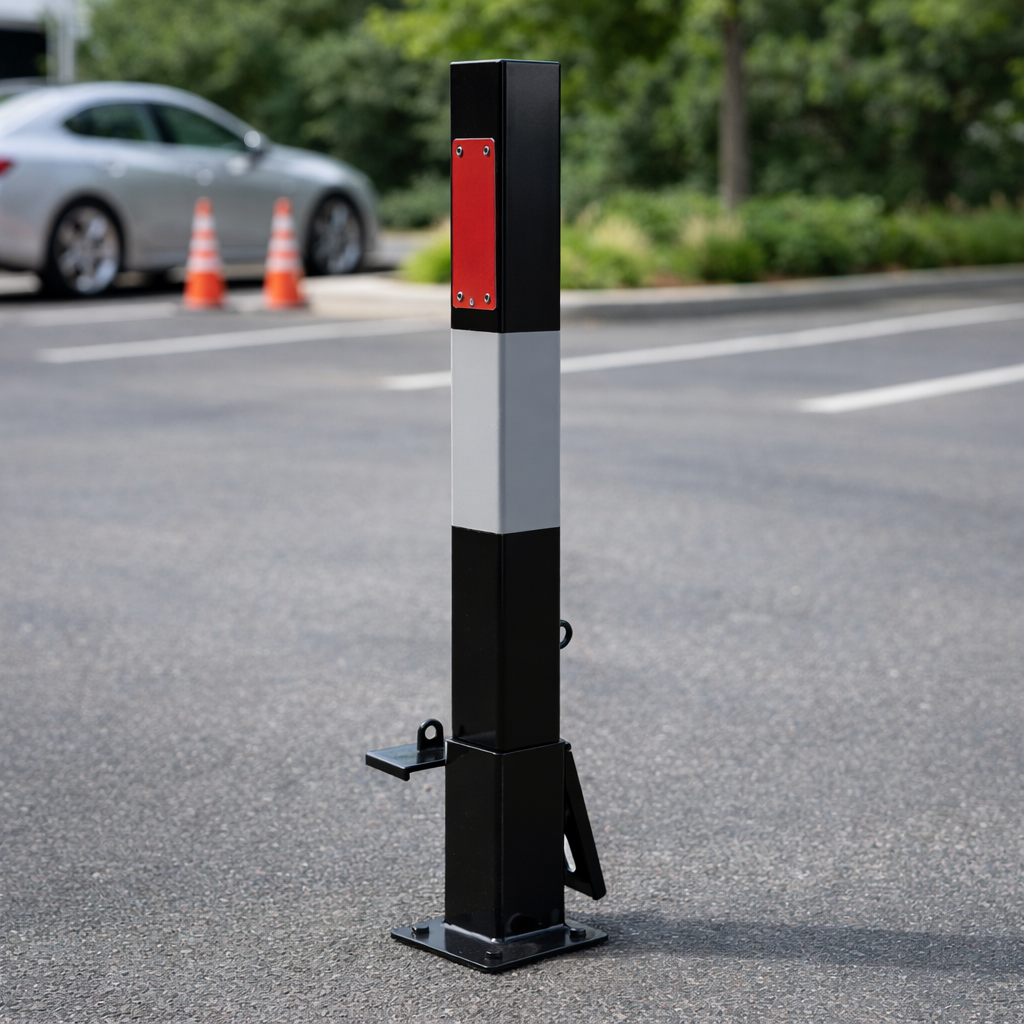
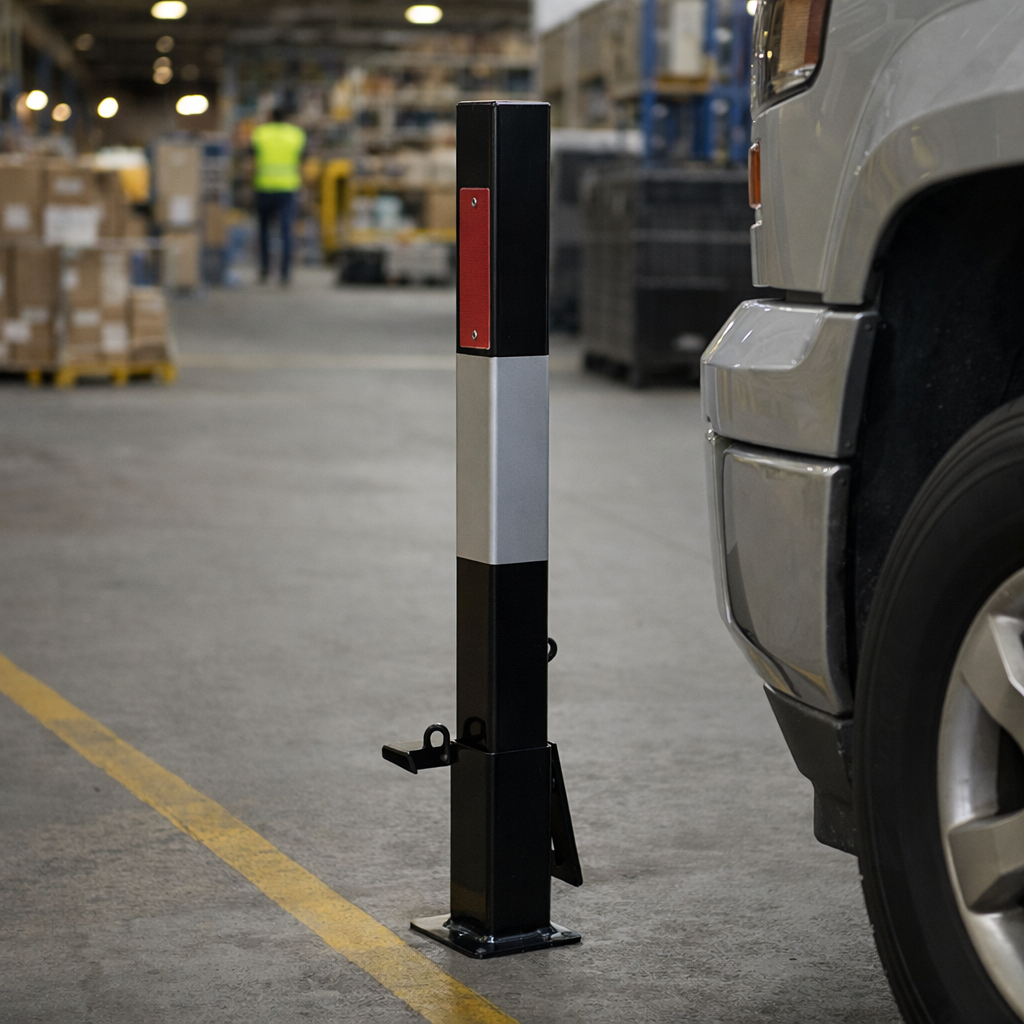
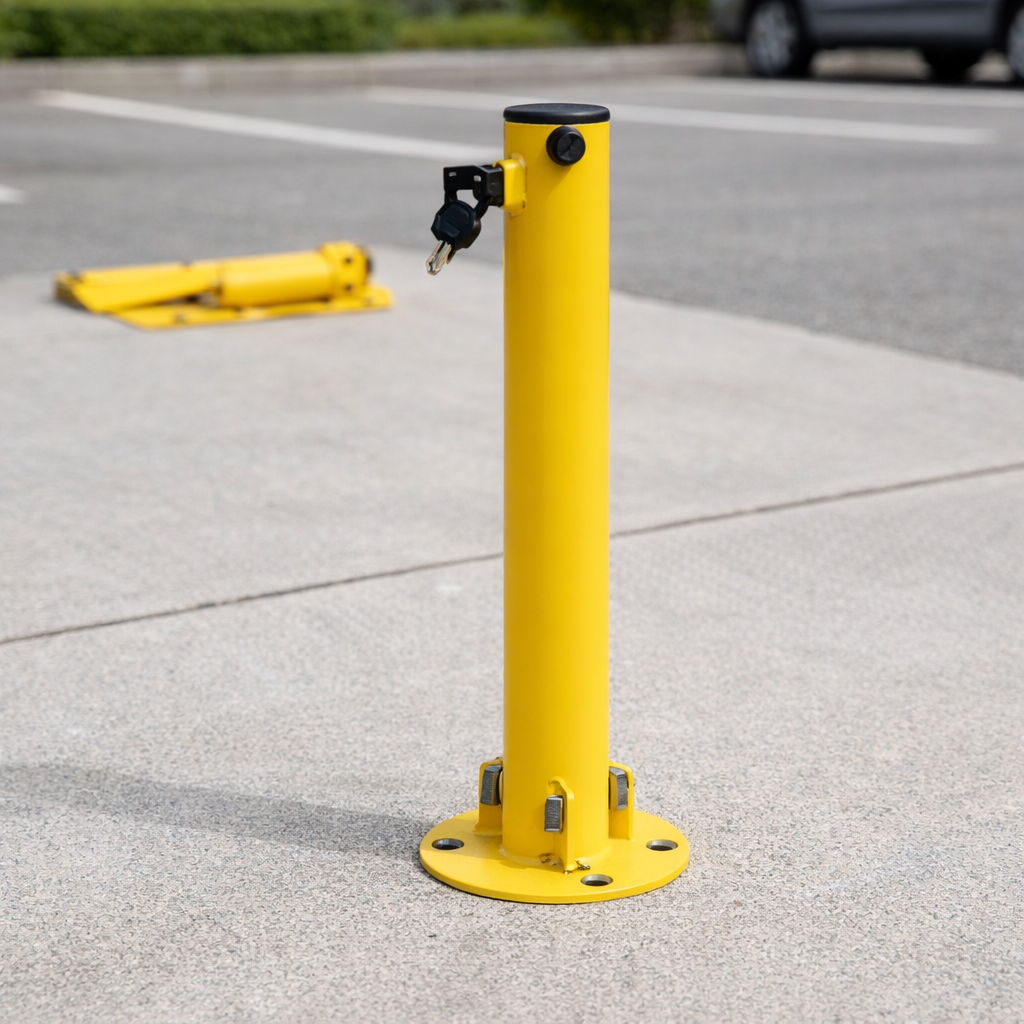
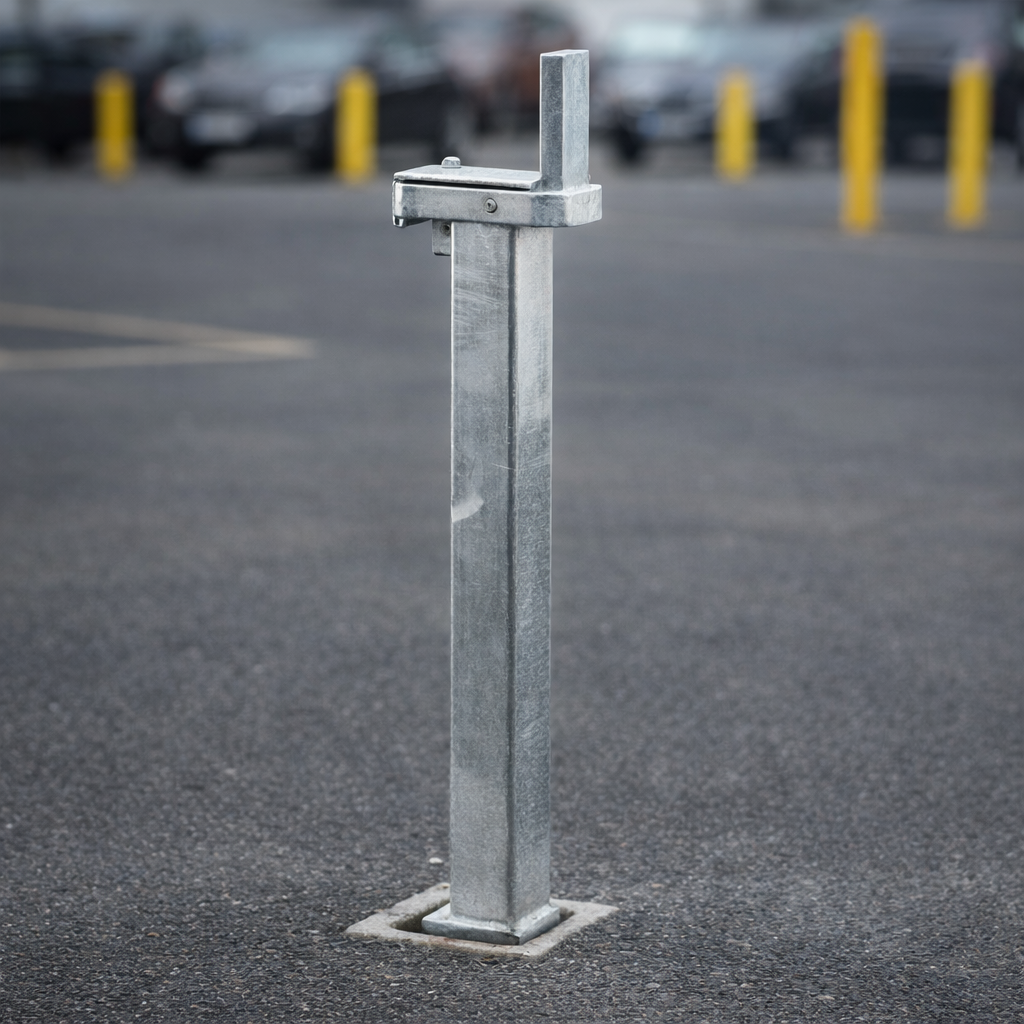
Lockable Removable Bollards
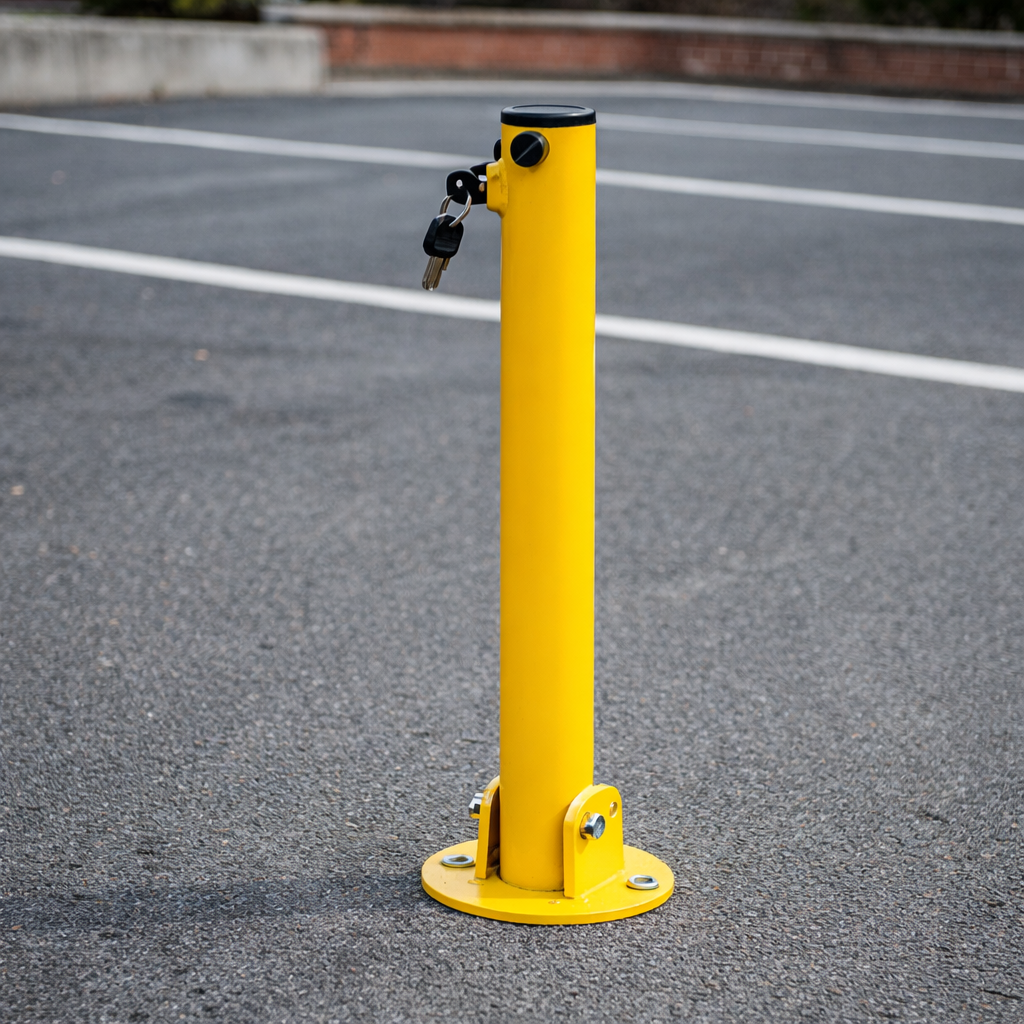
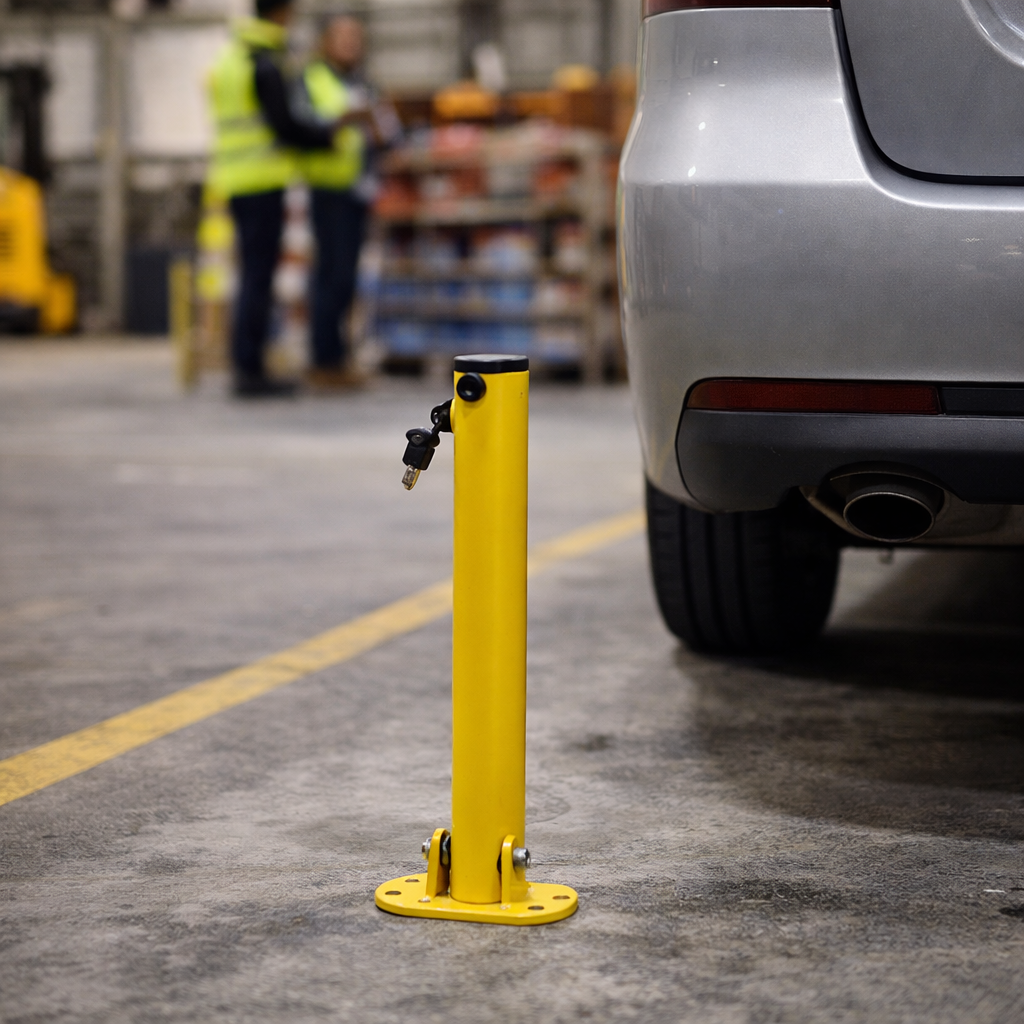
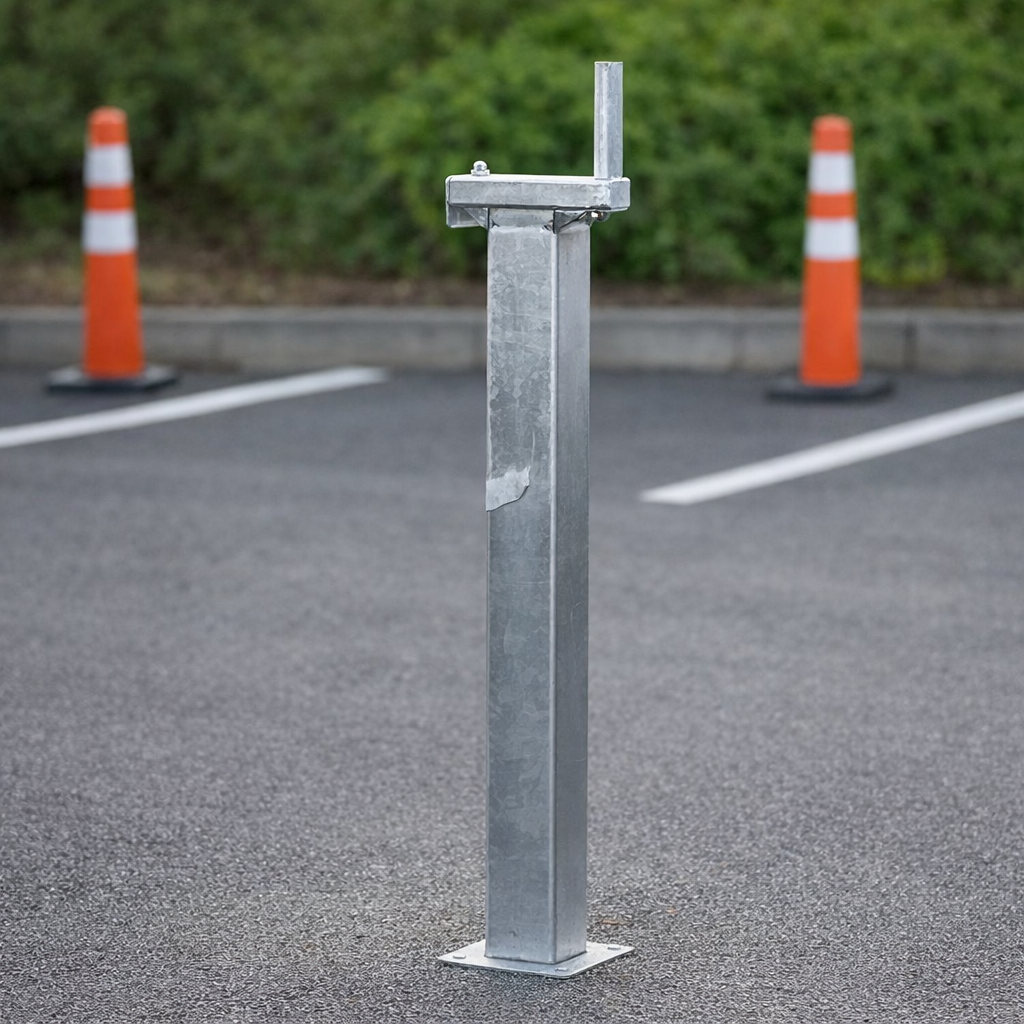
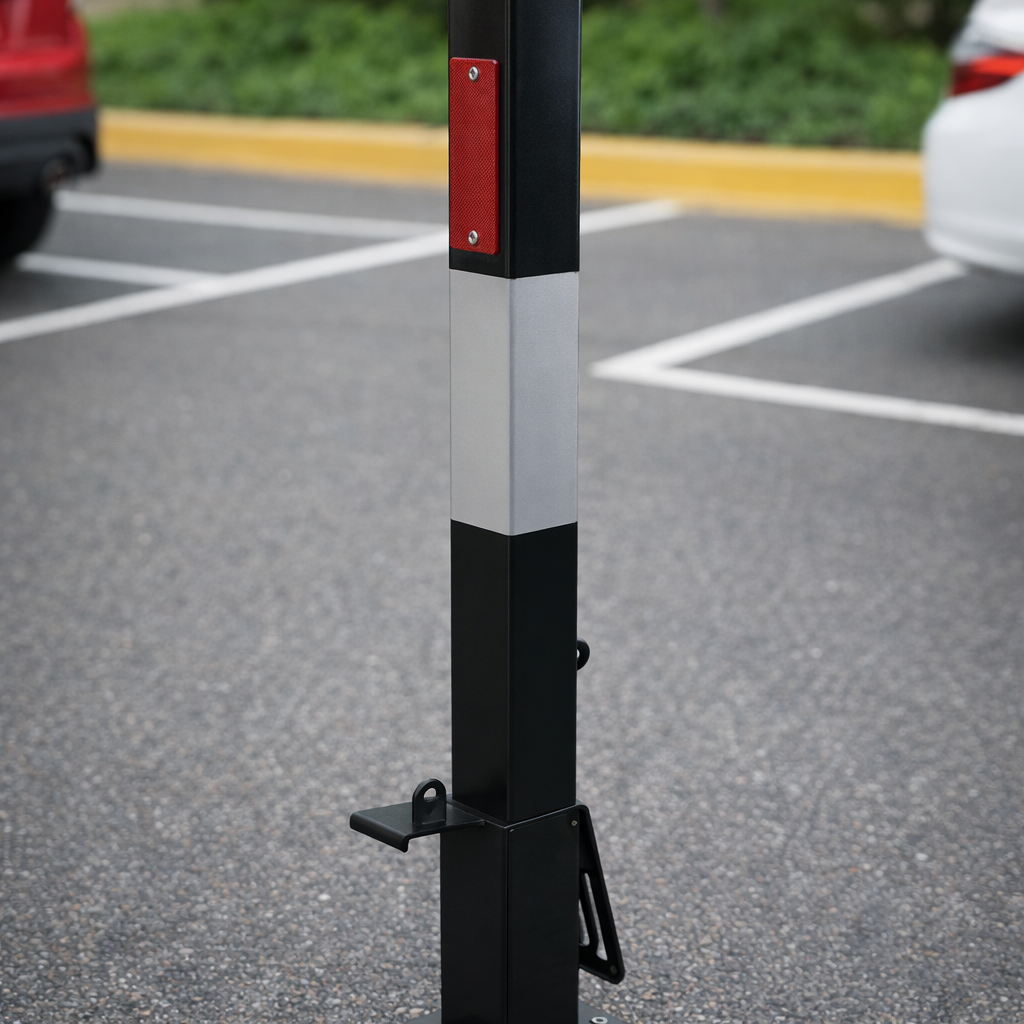
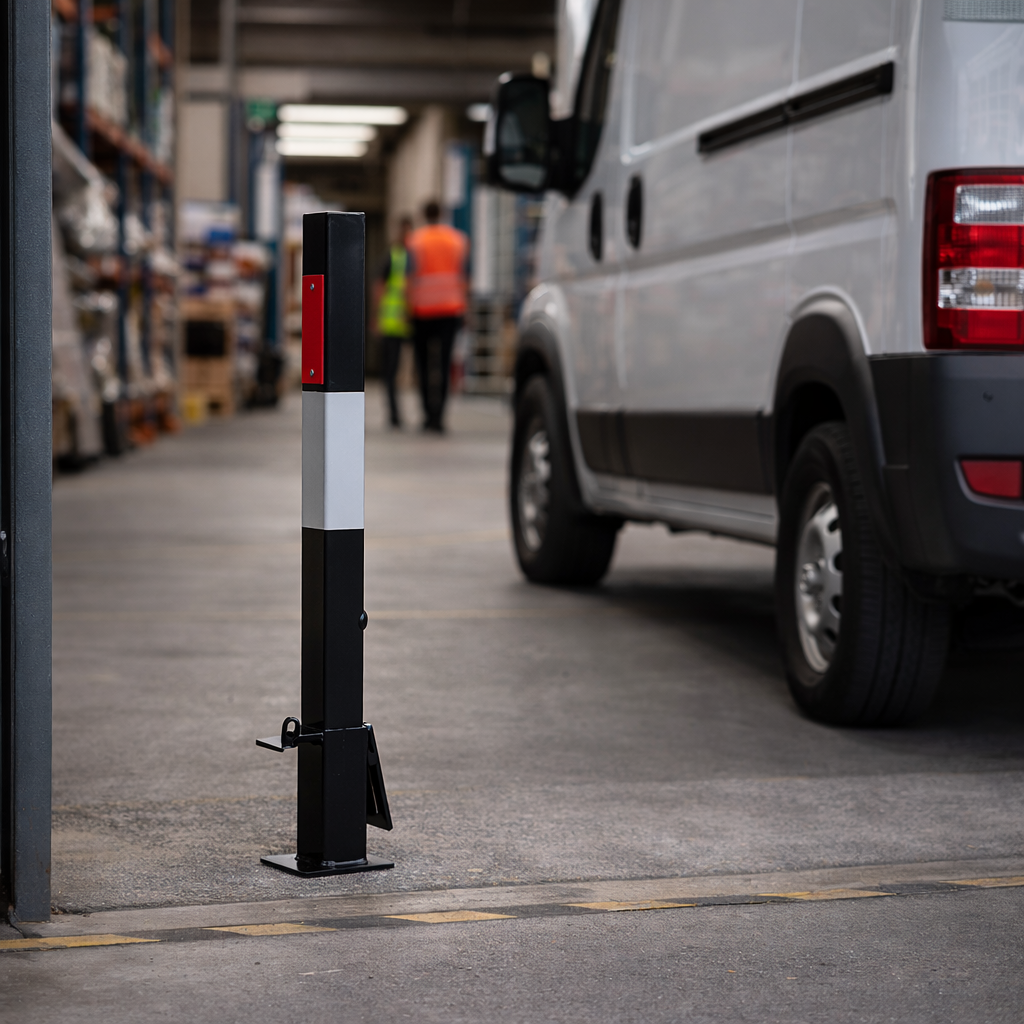
The most flexible format for private parking bays and reserved spaces. The bollard is installed in a ground socket and can be locked in the upright position to prevent unauthorised use of the bay. When the bay owner arrives, they unlock and lower (or remove) the bollard to access their space. Available in steel and cast iron, with key-operated padlock cylinders. Essential for: private bay management in mixed-use developments, disabled bay protection, resident parking in urban areas, and commercial loading zones.
Fixed Steel Bollards
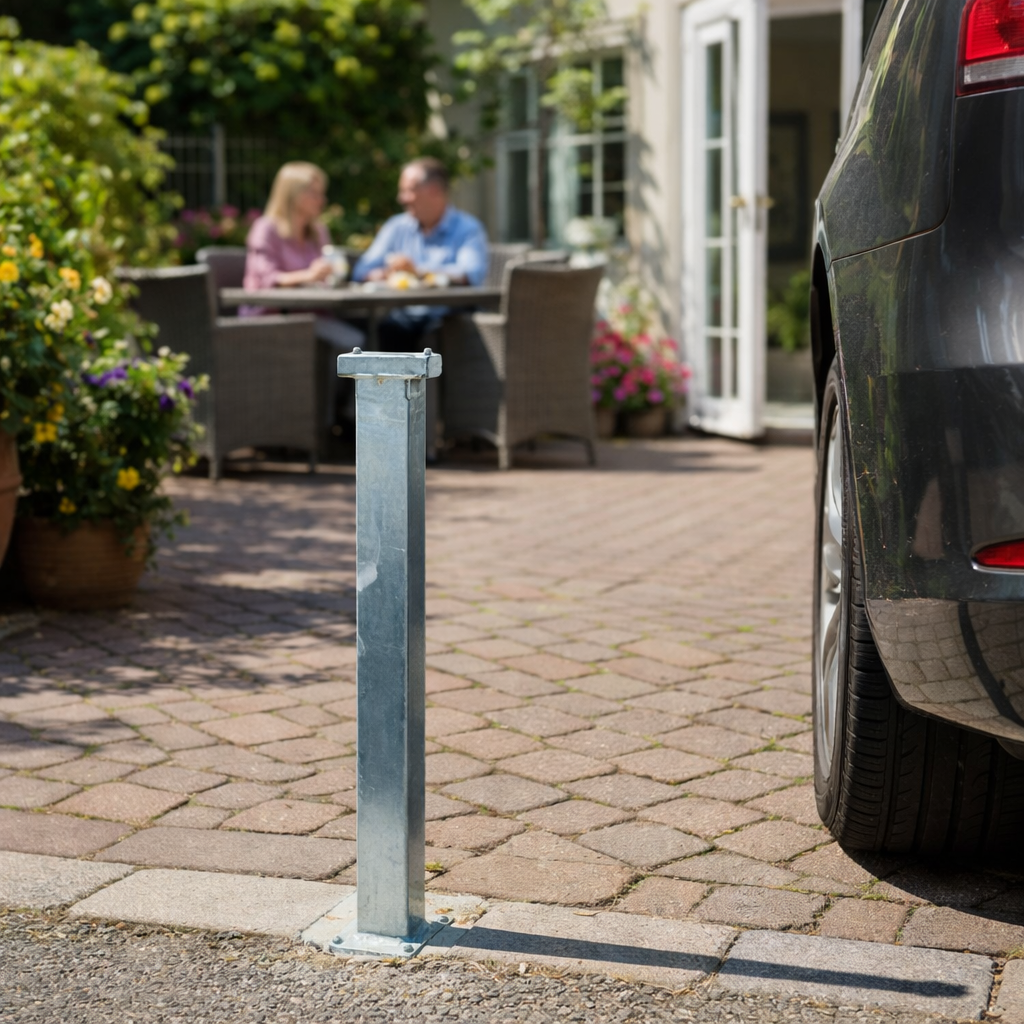
Permanently installed, low-maintenance vehicle deterrence for perimeters, building protection, and high-flow pedestrian areas. Hot-dip galvanised or powder-coated steel tube bollards are set in a concrete foundation or surface-mounted using expanding anchor bolts. The most durable and cost-effective option for permanent, unmanned applications. Available in a wide range of diameters (76mm–219mm), heights (600mm–1200mm), and finishes.
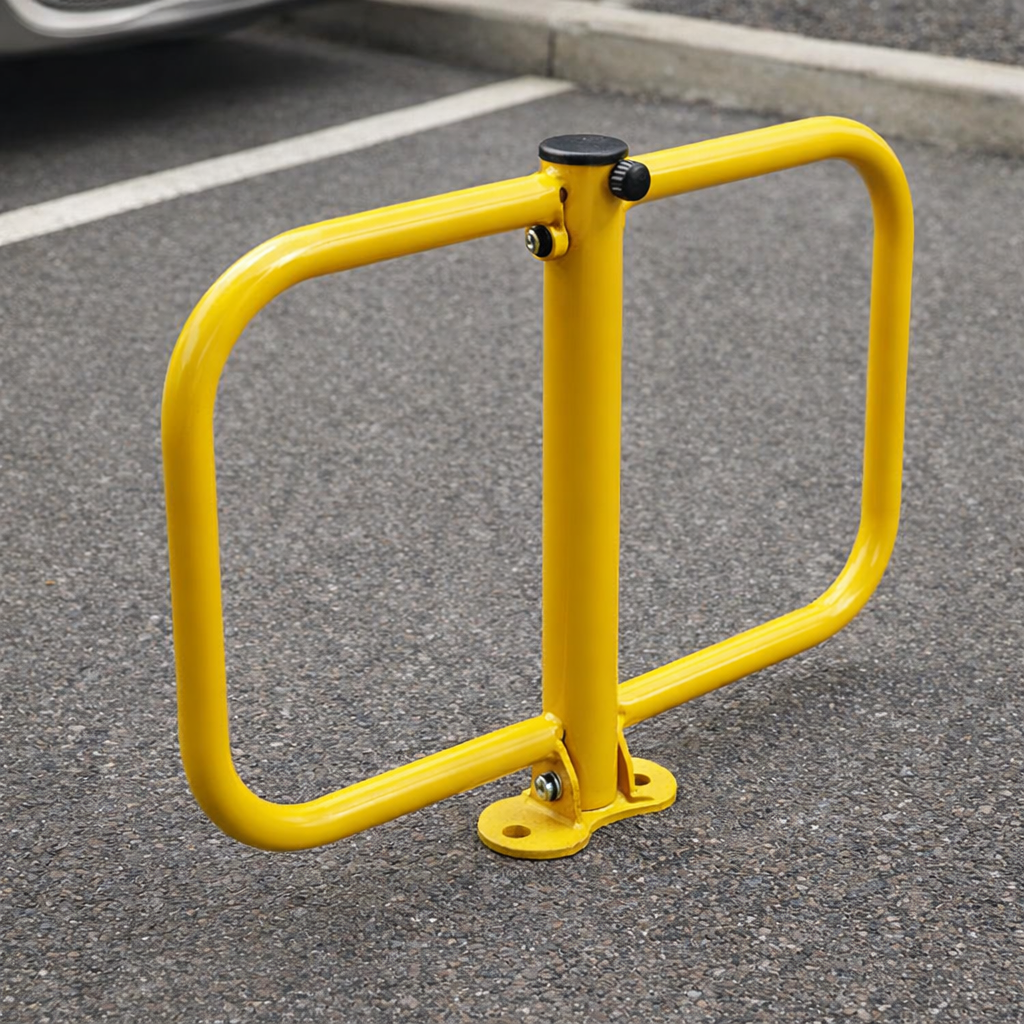
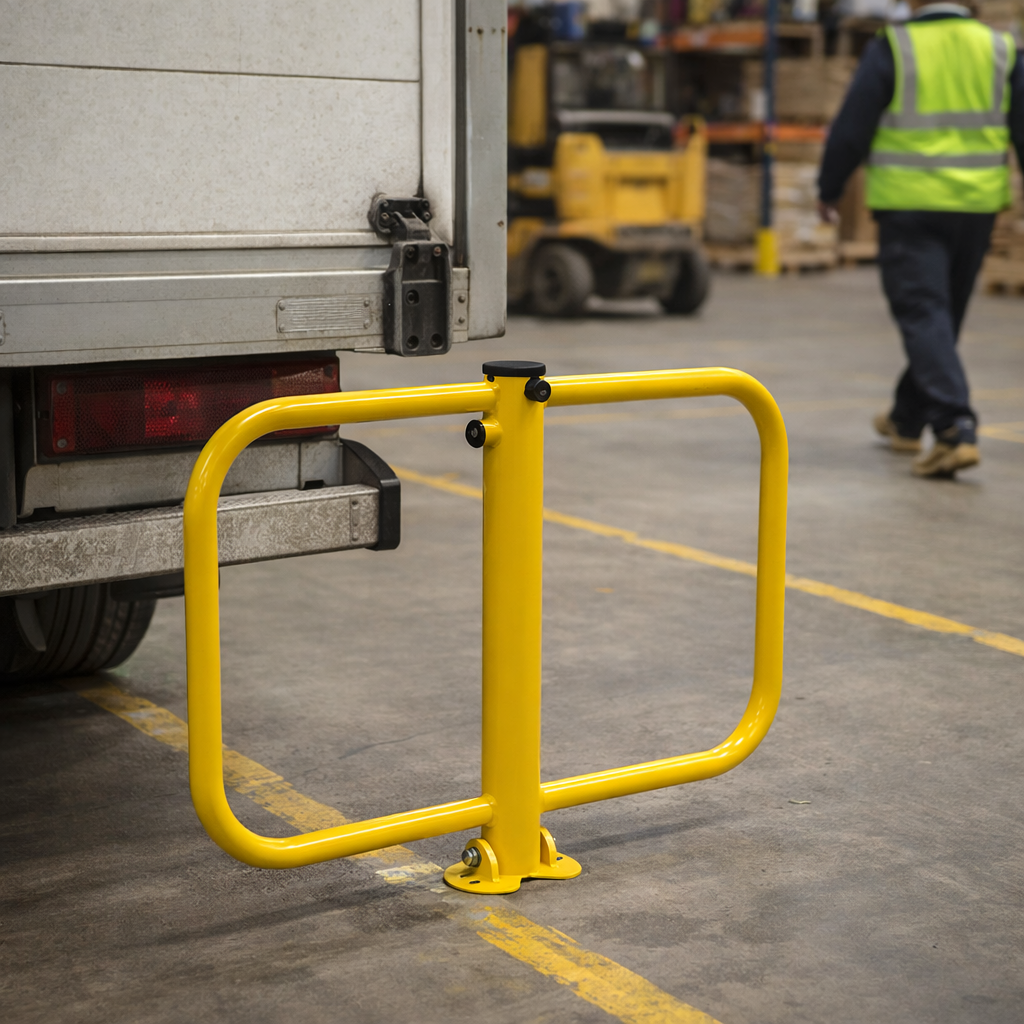
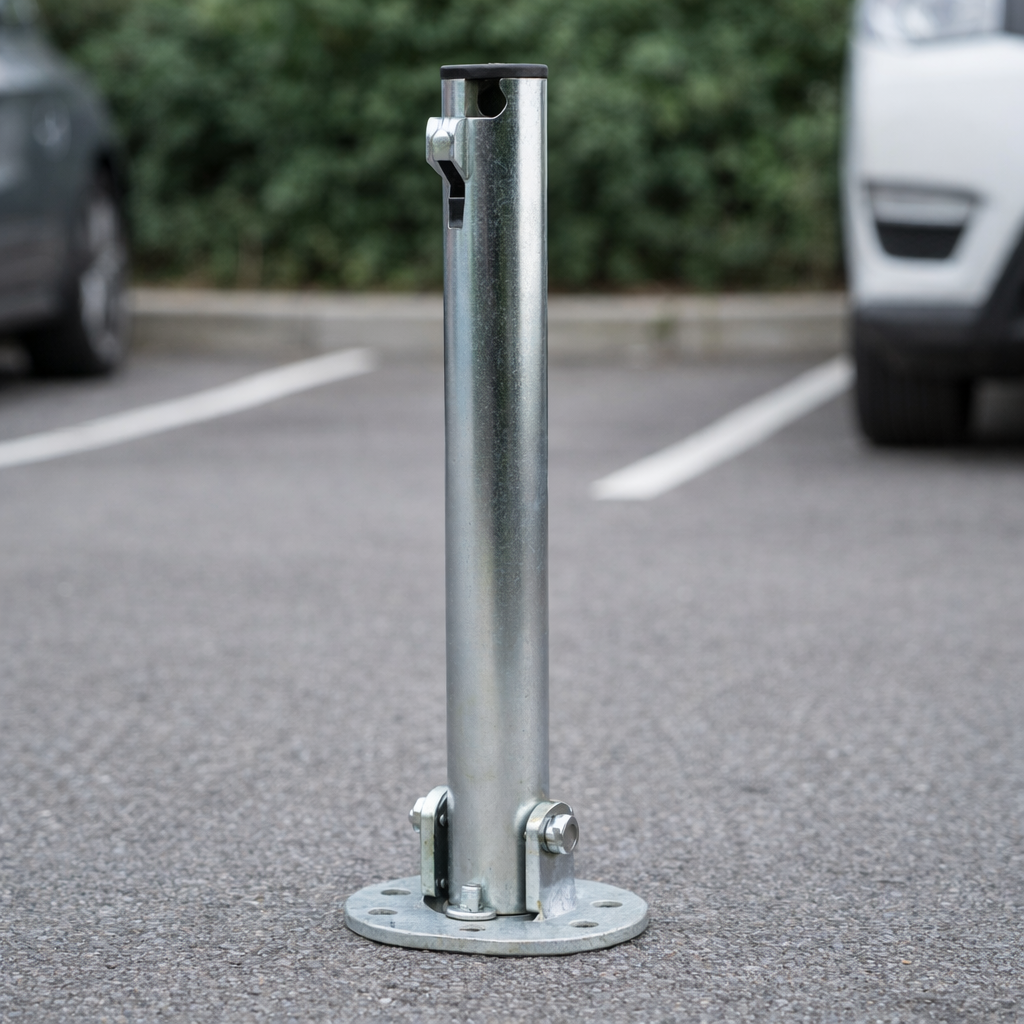
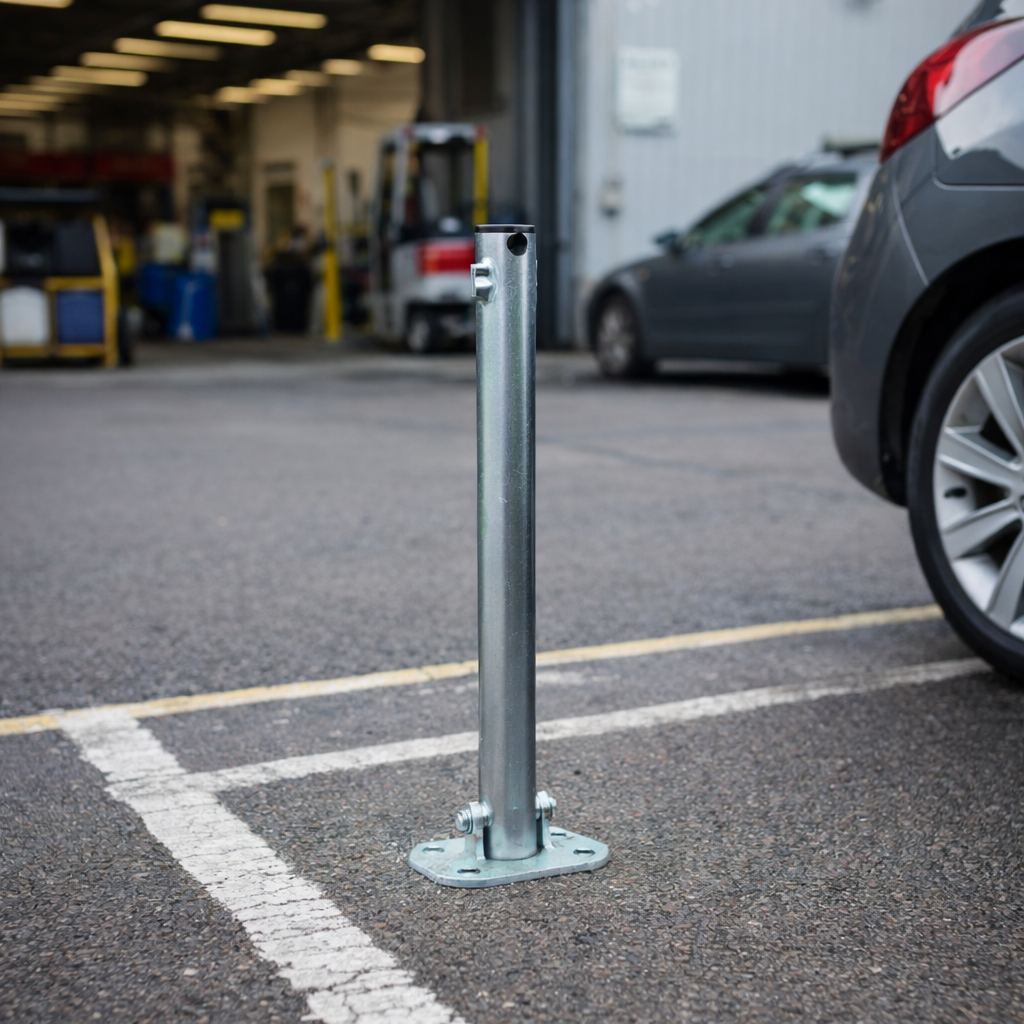
Retractable (Fold-Down) Bollards
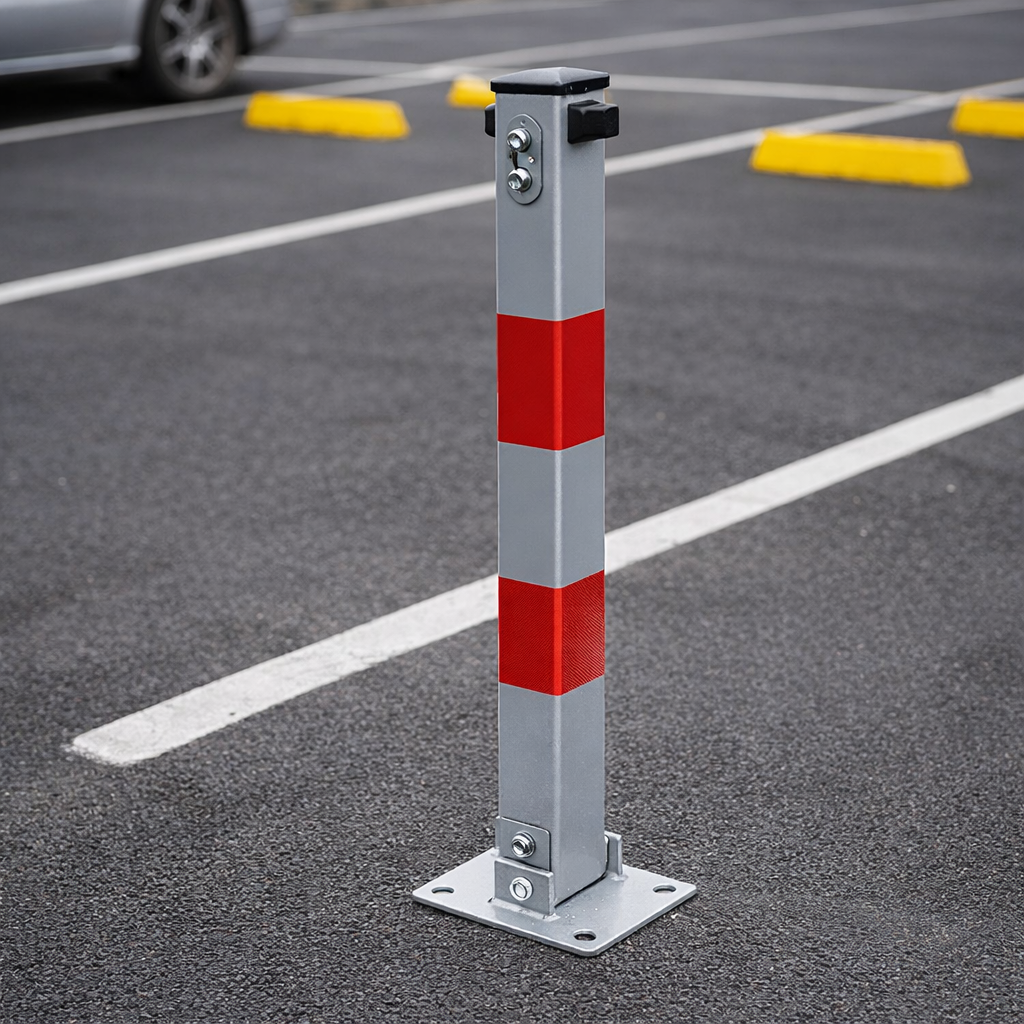
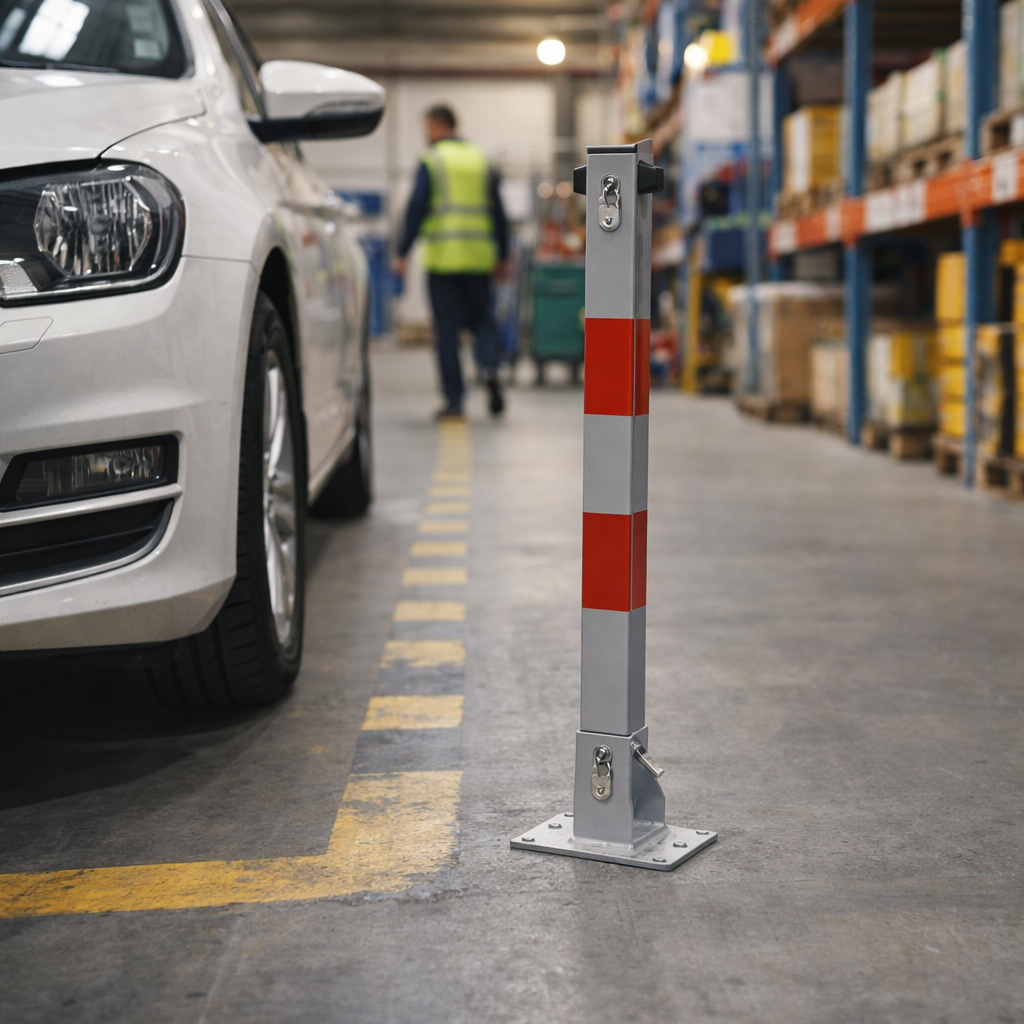
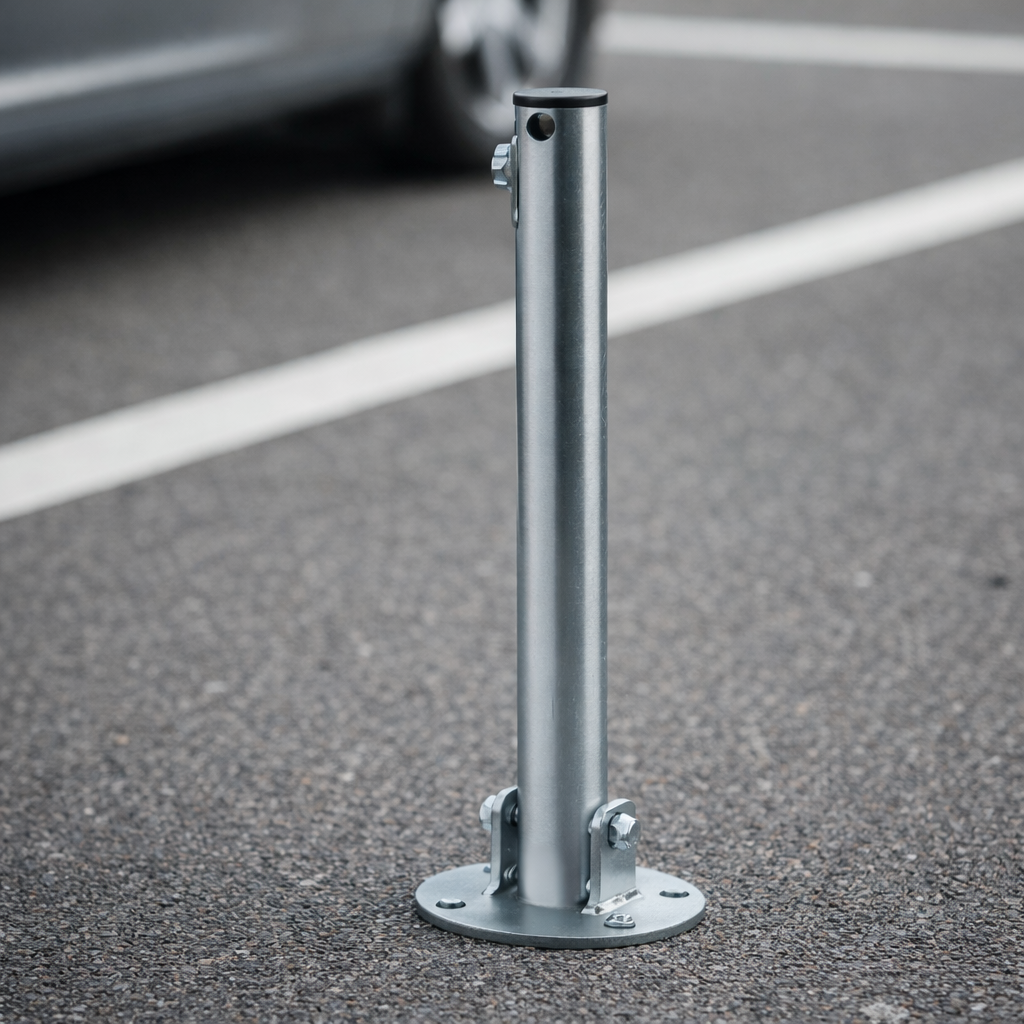
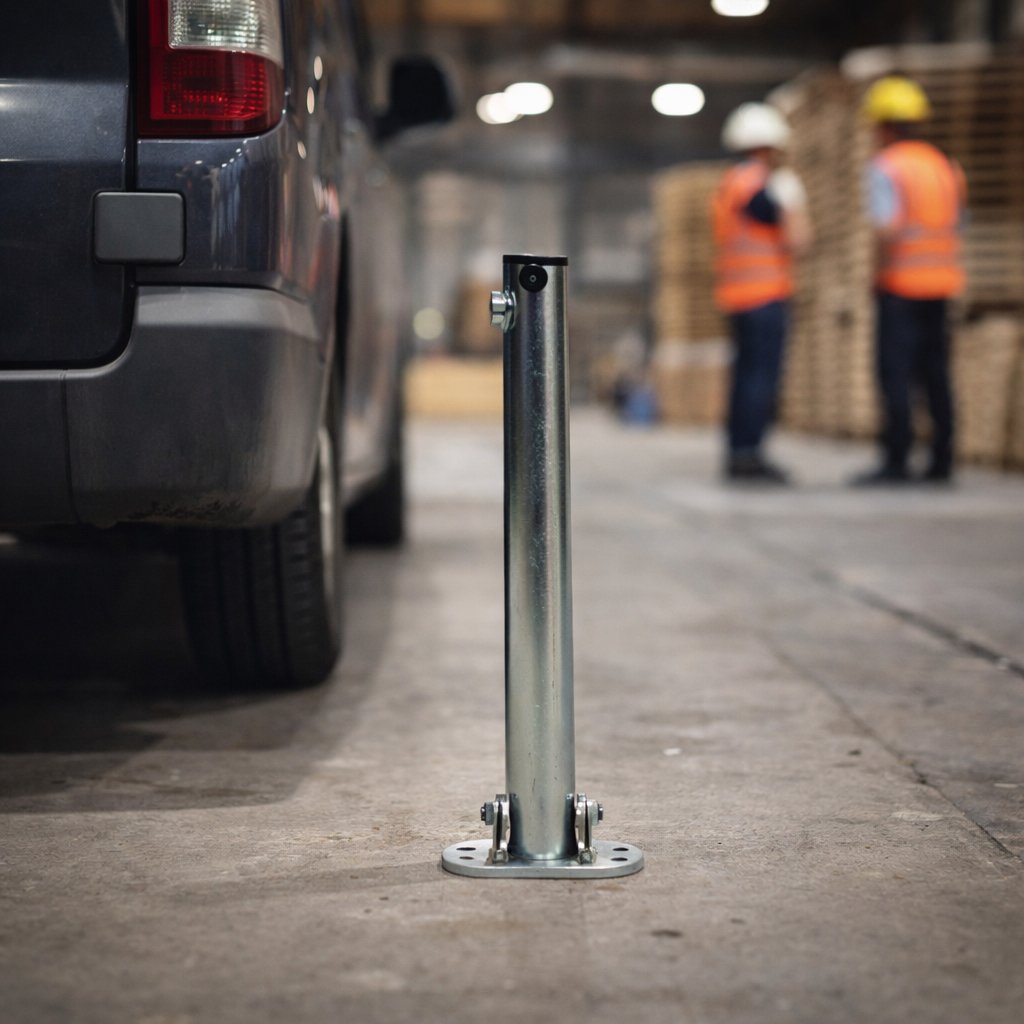
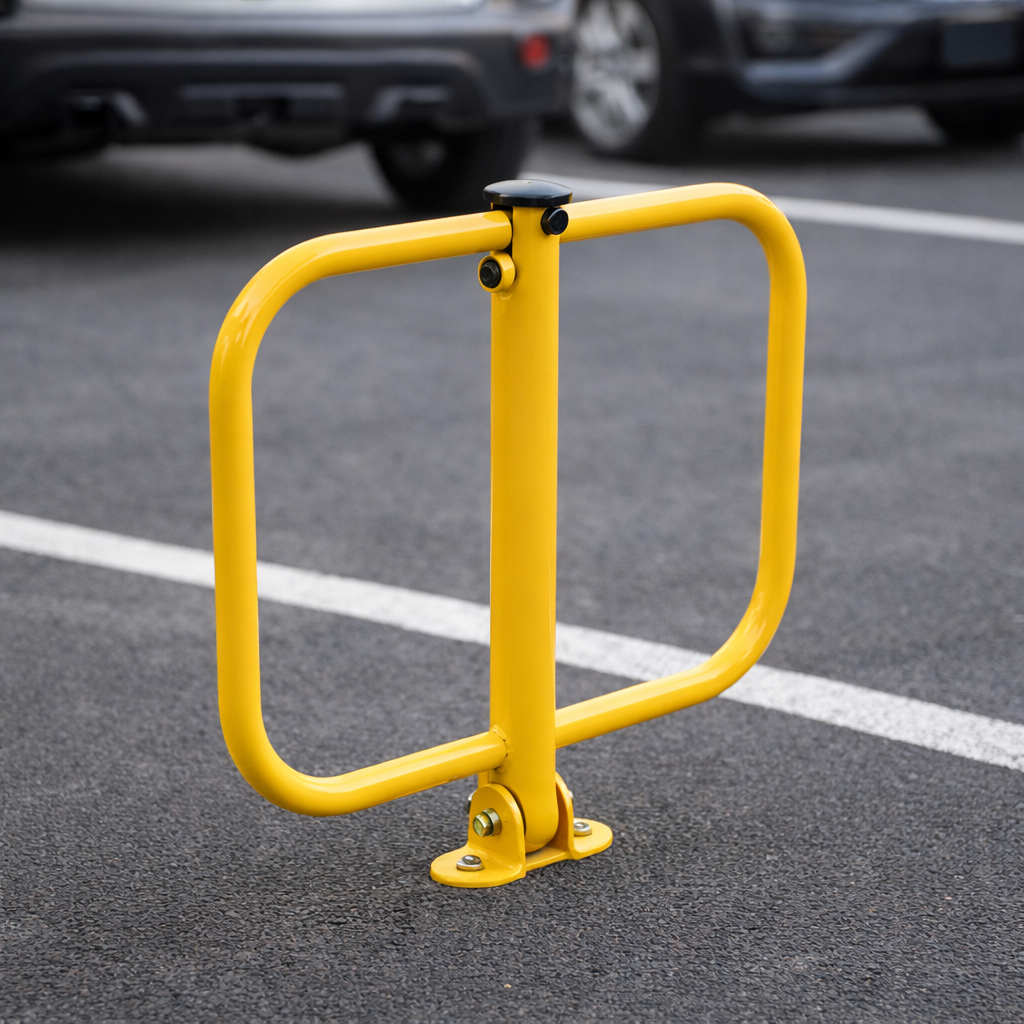
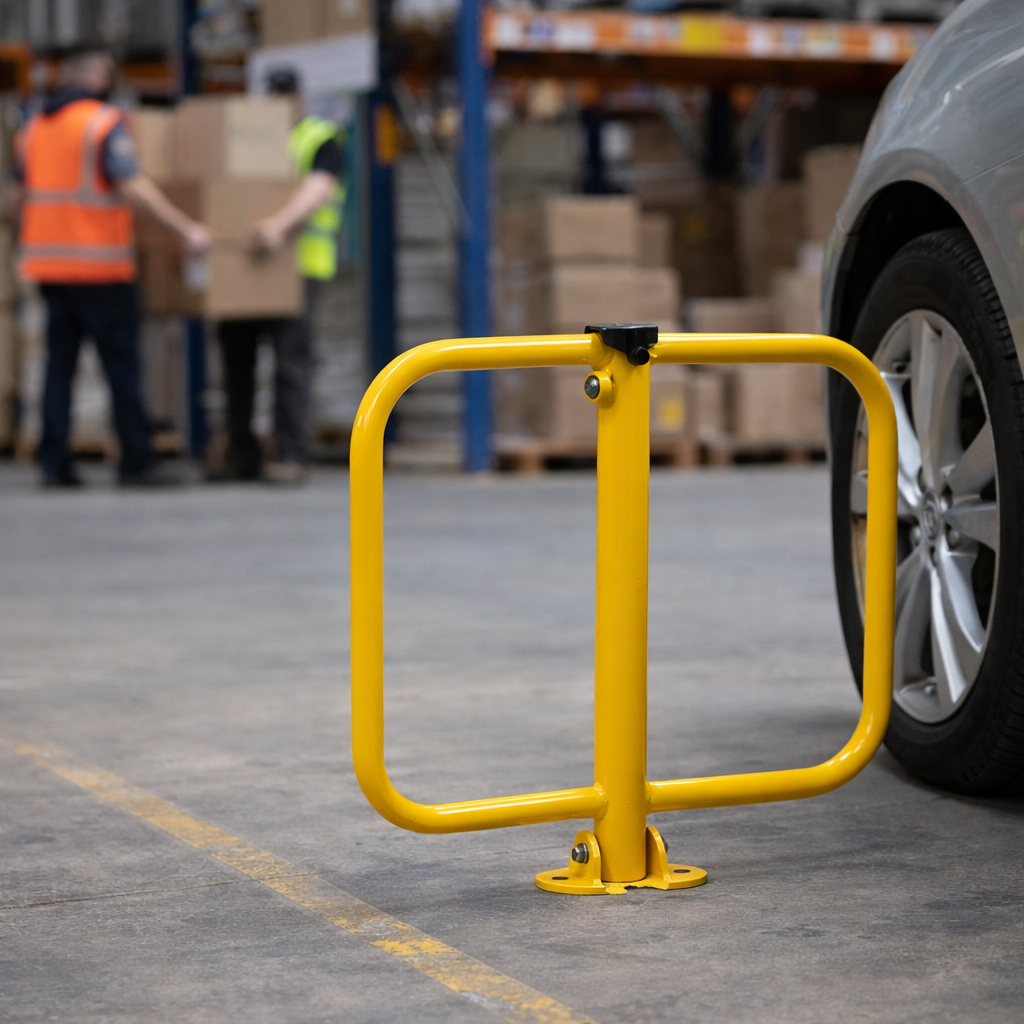
Bollards that hinge at the base and can be folded flat to the ground, allowing temporary vehicle access whilst remaining in position. When raised, the bollard locks in the upright position to prevent passage. Popular for shared driveways, private roads with occasional authorised vehicle access, and pedestrianised areas requiring emergency vehicle or delivery access. Can be key-operated or padlock-operated depending on the security requirement.
Anti-Theft Locking Bollards
Where bollard theft is a risk — city centre locations, high-footfall areas, or sites with a history of theft — anti-theft bollards use concealed fasteners, security fixings (Torx, Sentinel, or clutch-head bolts), and heavy-walled tube to deter and resist removal. Stainless steel models are specified for coastal locations and environments where standard galvanised steel would corrode prematurely.
High-Visibility Parking Posts
Lightweight plastic or steel posts in yellow, black-and-yellow, or red provide high-visibility bay and area demarcation where heavy-duty steel bollards are not required. Used for pedestrian zone delineation, bay marking, and low-traffic perimeter marking. Not suitable where vehicle impact resistance is required. Easy to install, reposition, and replace.
Solar-Powered LED Bollards
Integrated LED illumination powered by embedded solar cells enhances visibility of bollards during low-light conditions — important for pedestrian safety and for ensuring drivers see the bollard before impact. Available in standard and high-visibility formats. Solar illuminated bollards require no external wiring, simplifying installation and reducing long-term maintenance costs.
Cast Iron Bollards
The traditional choice for heritage and conservation settings, urban squares, and prestige commercial premises. Cast iron bollards offer outstanding compressive strength, excellent corrosion resistance when correctly primed and painted, and a classic aesthetic that complements historic paving and street furniture. Available in a range of traditional profiles — plain, banded, cannon-top, and dome-top — all suitable for both new installations and reinstatement projects.
Key Technical Specifications
- Diameter (steel): 76mm, 100mm, 114mm, 140mm, 168mm, 219mm OD
- Height: 600mm, 750mm, 900mm, 1000mm, 1200mm above ground
- Wall thickness: 3mm–10mm depending on specification; thicker walls for vehicle protection
- Foundation: Surface mount (anchor bolts), in-ground concrete-fill (600–1000mm depth), or ground socket for removable types
- Material: Hot-rolled steel, stainless steel grade 304/316, cast iron, polyethylene (plastic)
- Finish: Hot-dip galvanised, polyester powder coat (RAL to order), painted cast iron, mill stainless
- Locking: Padlock hasp, key barrel, flip-up slam lock, chain-eye
- Visibility enhancement: Reflective banding (Type 1 or Type 2 retro-reflective tape), LED illumination, yellow cap
- Weight (typical 100mm × 1000mm steel): 18–25kg depending on wall thickness
Installation Guidance
Correct installation is critical to the bollard performing its intended function. Surface-mounted bollards using anchor bolts must be fixed into concrete or equivalent load-bearing substrate — not asphalt or block paving without a concrete haunch. Anchor bolt specifications must match the bollard load case: for vehicle-stop applications, use M20 or larger stainless steel chemical anchors with a minimum 120mm embedment into concrete of minimum C25 strength. In-ground concrete-fill installations should use a minimum 150mm diameter × 600mm deep foundation tube filled with C30 concrete. For pavement and public highway installations, always check for underground services using a buried services survey before excavation.
UK Standards & Legal Context
- Health and Safety at Work Act 1974 — duty to prevent foreseeable vehicle/pedestrian conflict on controlled premises
- Workplace (Health, Safety and Welfare) Regulations 1992 — traffic routes must be organised to minimise risk
- Highways Act 1980 — bollards on or adjacent to the public highway require highway authority consent; unlicensed obstructions are a criminal offence
- BS EN 1991-1-7 — Eurocode 1: accidental actions (relevant to vehicle impact design loads for building protection)
- New Roads and Street Works Act 1991 (NRSWA) — applicable to any works in the public highway
- Town and Country Planning Act 1990 — some permanent external structures may require planning permission; check with your LPA
- Equality Act 2010 — bollard placement must not obstruct wheelchair users or create hazards for visually impaired pedestrians; minimum 900mm clear walkway required
- BS 8300:2018 — Design of buildings and their approaches to meet the needs of disabled people
Applications
- Private and reserved parking bay protection
- Loading bay and fire route access control
- Pavement and footway protection from vehicles
- Building corner and column protection
- Car park perimeter and pedestrian zone demarcation
- Disabled bay enforcement
- Retail forecourt and shopfront protection
- Utility and infrastructure protection (gas cabinets, electric substations)
- School and hospital drop-off zone management
- Private road, driveway, and courtyard access control
Frequently Asked Questions
Can I install a parking bollard on a public pavement or road?
No — installing any physical obstruction on the public highway (road, pavement, or verge) without consent from the local highway authority is an offence under the Highways Act 1980. You can apply to your local council for a licence or formal consent to install bollards on or adjacent to the highway — this is sometimes granted for businesses with adjacent loading bays or disabled access requirements. On private land up to the highway boundary, you can generally install bollards without consent, but check that the bollard does not obstruct sightlines for highway users or encroach on the highway itself.
What size bollard do I need to stop a vehicle?
For a credible vehicle deterrent in a low-speed, low-mass scenario (e.g., preventing parking or slow-speed trespass), a 76mm–114mm diameter steel bollard set in a concrete foundation provides an effective physical barrier. For higher-mass or higher-speed scenarios — accidental vehicle runaway, delivery vehicle incursion — specify a minimum 168mm diameter steel bollard with a deep concrete foundation. For certified hostile vehicle mitigation, you must use a PAS 68 or IWA 14-tested and certified security bollard — see our Security Bollards range. Standard parking bollards are not tested or certified for HVM purposes and should not be used as a substitute.
How do I maintain a removable locking bollard?
Locking mechanisms should be lubricated with a silicone spray or graphite lubricant at least twice per year — more frequently in coastal or high-pollution environments. Inspect the ground socket for water ingress and corrosion; socket covers should be kept clear of debris. Check that the bollard locks firmly in the upright position and that the fold-down hinge (if applicable) operates smoothly. Replace any bollard with a deformed tube, cracked weld, or inoperative lock immediately — a compromised bollard provides no security value and may create a trip hazard.
Are yellow plastic bollard posts suitable for protecting my building?
Plastic bollard posts are suitable for bay marking and low-speed pedestrian area delineation, but they offer minimal resistance to vehicle impact and are not appropriate for building or asset protection. If a vehicle contact is a realistic risk — from delivery vehicles, car park manoeuvres, or emergency situations — specify steel bollards with appropriate foundations. Plastic posts are best reserved for internal warehouse and car park aisle marking where speeds are very low and the vehicle mass is limited.
Frequently Asked Questions
What is the difference between surface-mount and core-drill parking bollards?
Surface-mount parking bollards are fixed to an existing hard surface using a steel baseplate and anchor bolts drilled into the substrate — ideal where excavation is not possible. Core-drill (in-ground) bollards are installed by drilling a hole in the surface and setting the bollard in concrete, giving a cleaner appearance with no visible baseplate and greater strength. Core-drill installation is generally preferred for permanent high-security applications, while surface-mount is suitable for most standard parking management needs.
Are parking bollards compatible with padlocks?
Yes. Many of our parking bollards feature a folding or hinged design with a padlock hasp, allowing the bollard to be locked in the upright (blocking) position with a standard padlock or a high-security close-shackle padlock. For maximum security, a Sold Secure-rated close-shackle padlock is recommended to resist cutting and picking. Key-lock parking posts (which have an integrated key cylinder) are also available as an alternative to padlock-compatible folding bollards.
What is the difference between retractable and fixed parking bollards?
Fixed parking bollards provide a permanent physical barrier that cannot be moved — best for spaces that should never be accessed by unauthorised vehicles. Retractable or folding parking posts can be lowered flat against the ground or folded down to allow authorised vehicle access, then raised and locked to prevent access when the space should be reserved. Retractable bollards offer the most flexibility for reserved parking bays and private driveways.
Should I choose a yellow or black parking bollard?
Yellow parking bollards (often with black chevron banding) provide maximum visibility and are recommended where drivers need a clear visual warning of the parking restriction — for example in car parks, loading zones, and areas with low-light conditions. Black parking bollards offer a more discreet, aesthetic appearance suited to residential driveways, private parking areas, and settings where a bold yellow finish would look out of place. Both colours are equally functional; the choice is based on visibility requirement and aesthetics.
Is there any compliance requirement for parking bollards on private land?
There are no specific mandatory compliance standards for parking bollards on private land in the UK. However, BS 8300 (accessibility) recommends that bollards used near pedestrian areas should be a minimum of 1000mm high, visually distinguishable from their background, and detectable by people using a white cane. For parking bollards adjacent to public footpaths or shared surfaces, these accessibility guidelines should be followed. Always check local planning conditions which may specify street furniture standards.
How do I stop my parking bollard from being stolen?
To maximise theft resistance: use in-ground (core-drill) installation rather than surface-mount where possible; choose bollards with anti-tamper fixings; use a high-security close-shackle padlock rated to Sold Secure Gold or higher; and select a bollard with an anti-pick key cylinder for integrated key-lock models. For folding bollards, ensure the hinge mechanism is robust and the padlock loop is well-protected. Highly visible bollards also act as a deterrent — potential thieves are less likely to attempt removal in plain sight.
Why Buy From Barriers Co?
On orders over £75
Specialist team on hand
10,000+ customers served
30-day hassle-free returns
Fast despatch from UK warehouses
Mon–Fri 9am–5pm




Recently viewed
- Opens in a new window.
Get 10% Off Your First Order
Join 500+ businesses who trust Barriers Co for their safety infrastructure
Need help choosing?
Our team is online now. Get instant answers about products, bulk pricing, or delivery.
Chat Now