




Last updated: May 2026. Written by the BarriersCo technical team.
Speed Cushions UK — Road Calming That Lets Emergency Vehicles Pass
Speed cushions are one of the most widely used road calming measures on residential streets across the UK — and for good reason. Unlike full-width speed bumps or humps, speed cushions are designed with a critical gap that allows emergency vehicles to pass at speed without delay, making them the preferred choice for roads on or near emergency service routes. This guide covers everything you need to know about buying, specifying, and installing speed cushions in the UK.
Speed Cushions vs Speed Bumps vs Speed Humps
Speed cushions are typically 300–400mm wide and installed in pairs or triplets across the road width, leaving a 700mm+ gap between them. This gap is specifically sized to allow emergency vehicle axle widths to pass unimpeded.
Speed bumps are typically 75–100mm tall and span the full road width, reducing vehicle speed to 5–10mph. They affect all vehicles equally and are not suitable for roads where emergency vehicle response times are critical.
Speed humps (sometimes called flat-top humps or table-top humps) span the full road width but are shallower (75mm), producing a gentler speed reduction to 20–25mph. They're commonly used at pedestrian crossing points. Neither bumps nor humps allow emergency vehicles to pass at speed.
How Speed Cushions Work
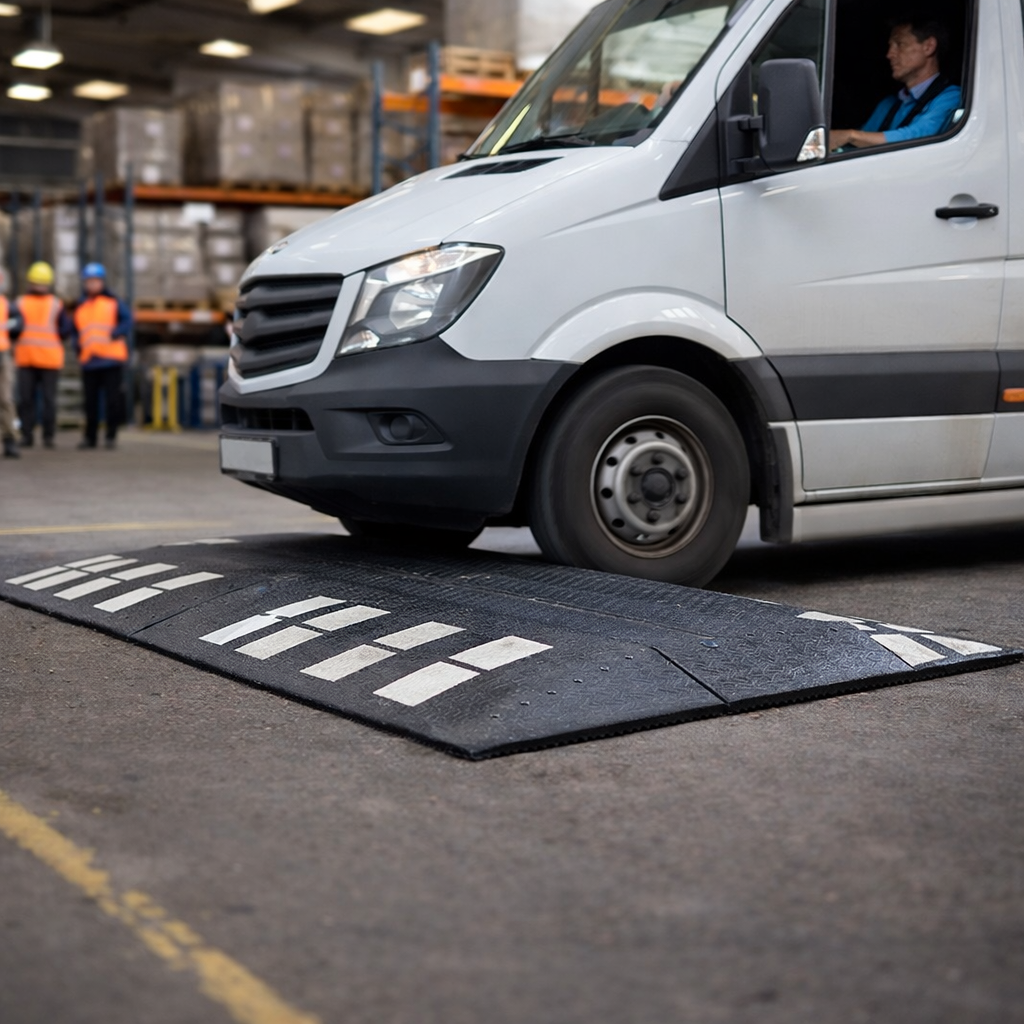
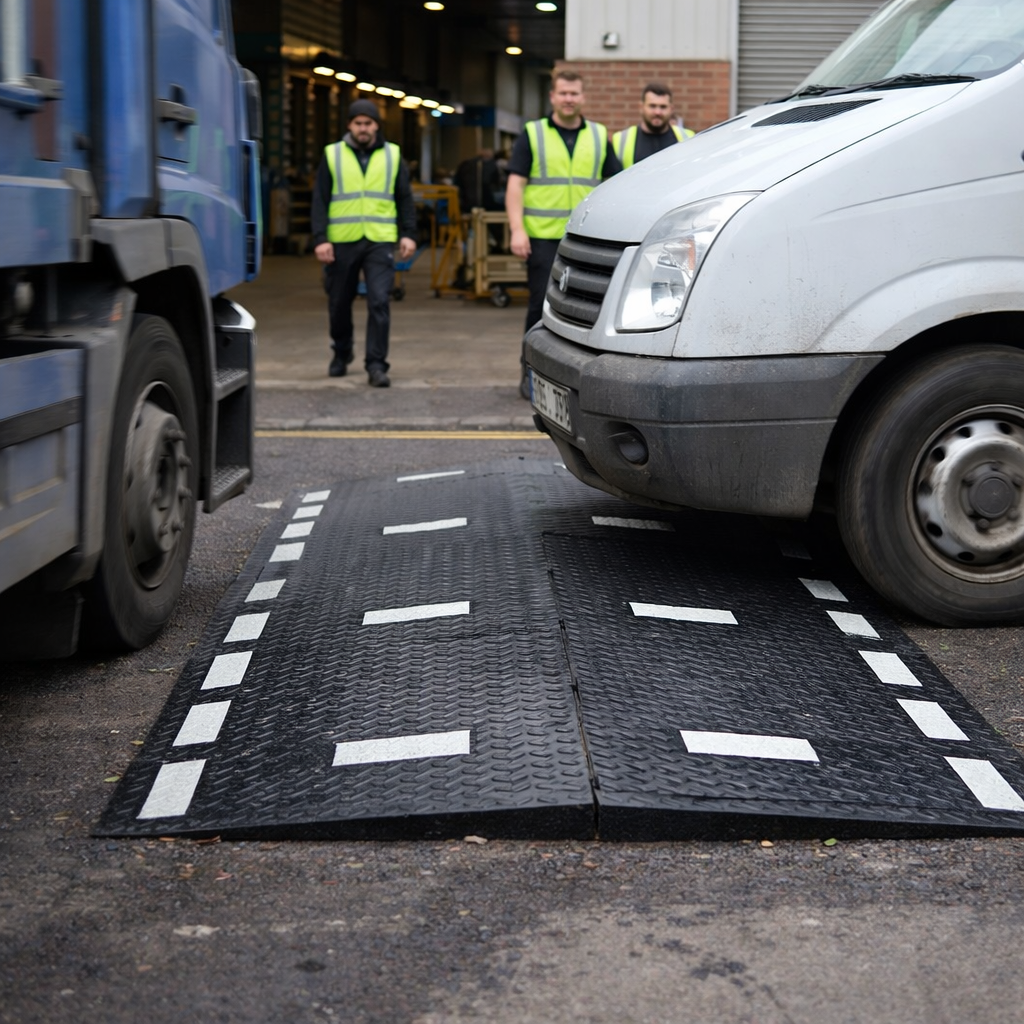
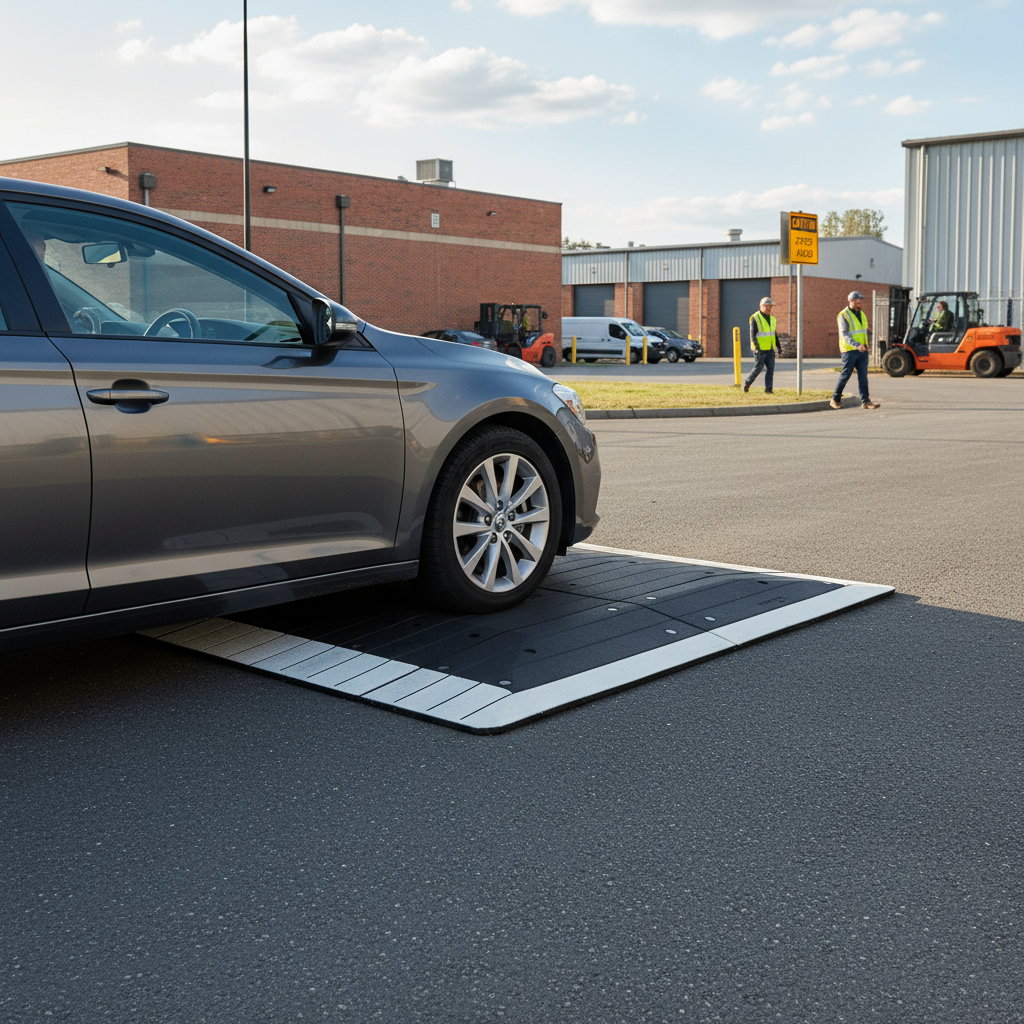
The physics is simple but ingenious. Private cars and vans — with a typical track width of 1,100–1,400mm — cannot straddle a pair of cushions placed 700–900mm apart, so their wheels must ride over the cushions and the driver slows to avoid discomfort. An ambulance or fire engine, with a track width of 1,800–2,000mm, can place its wheels in the gaps between cushions and pass at speed. The DfT's LTN 1/07 specifies that cushion gaps should be at least 700mm, which is the critical dimension to maintain during installation.
DfT Guidance and UK Standards
LTN 1/07 (Traffic Calming) is the key Department for Transport guidance document. It specifies: cushion height 75–100mm, cushion width 300–400mm (each), gap between cushions ≥700mm, preferred surface approach distance of 30–50m from the cushion. Speed cushions on public roads require approval from the local highway authority and must comply with the Highways (Road Humps) Regulations 1999. Signs (regulatory warning signs) are usually required upstream of each cushion installation.
Rubber vs Plastic Speed Cushions
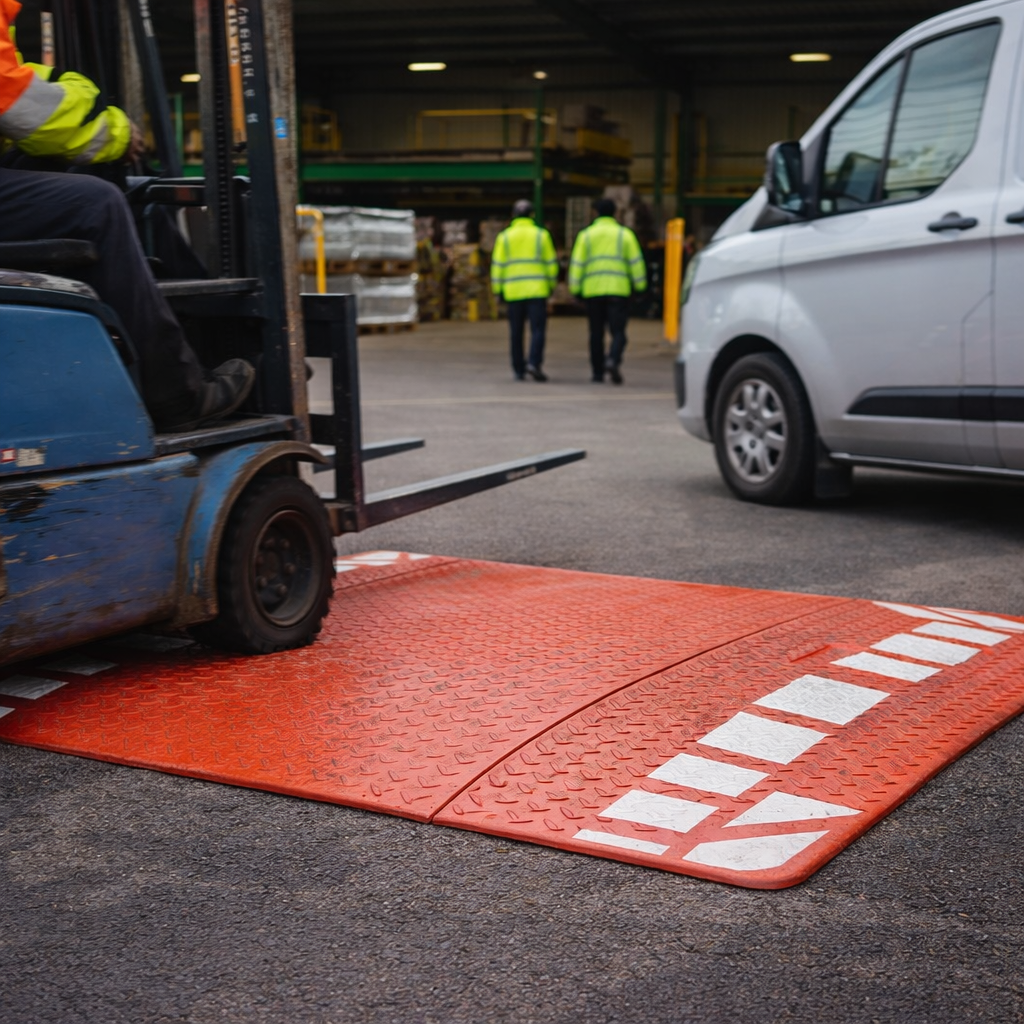
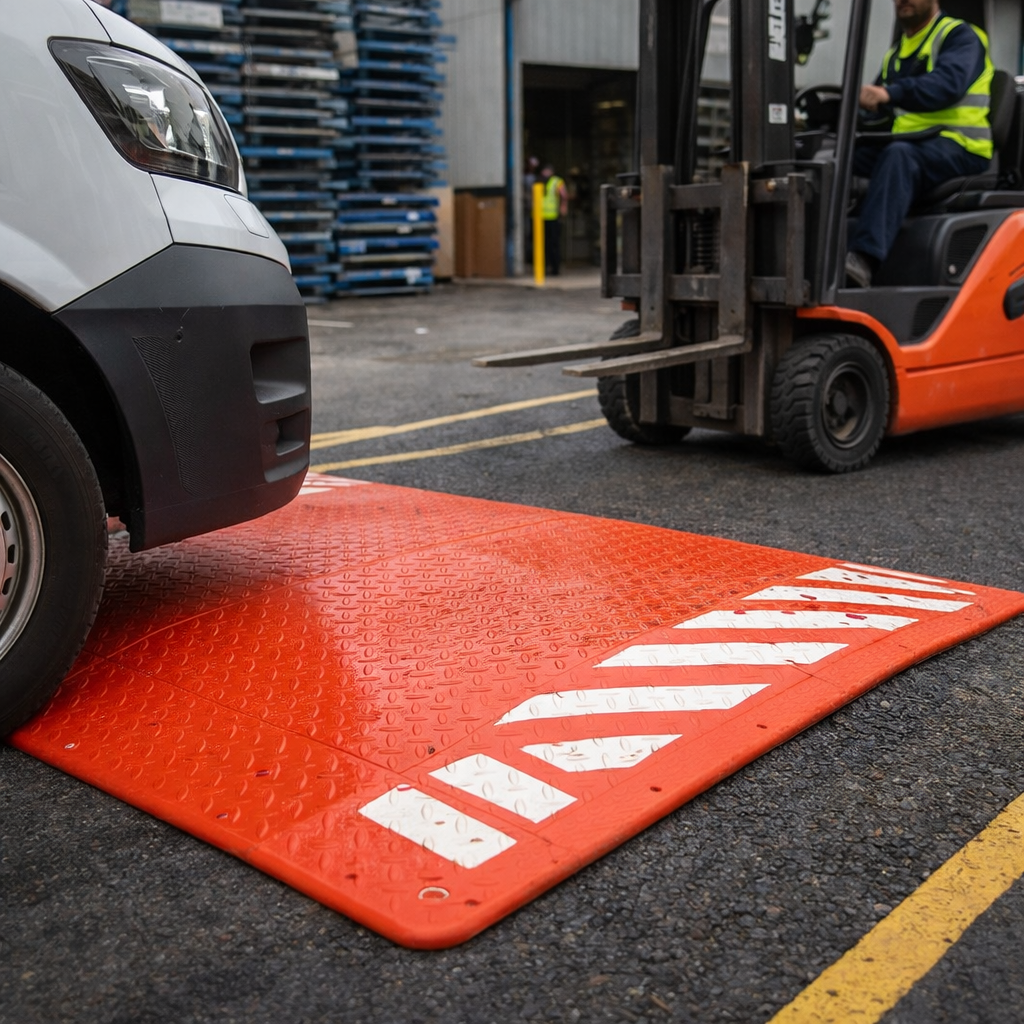
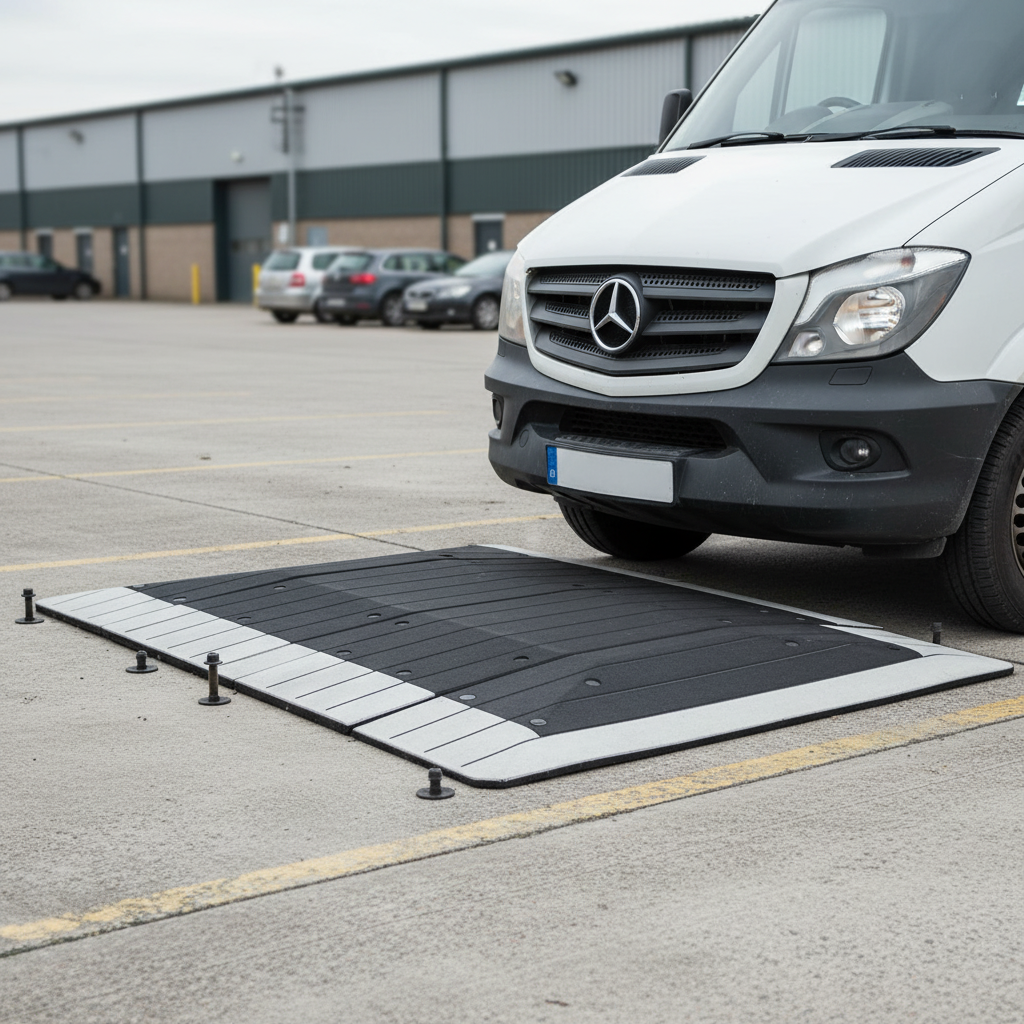
Recycled rubber cushions are the most popular choice for UK roads. They're flexible (reducing noise and vibration), UV-stable, frost-resistant, and available in modular sections for easy installation and replacement. Most are supplied with pre-drilled fixing holes and stainless steel fixing bolts.
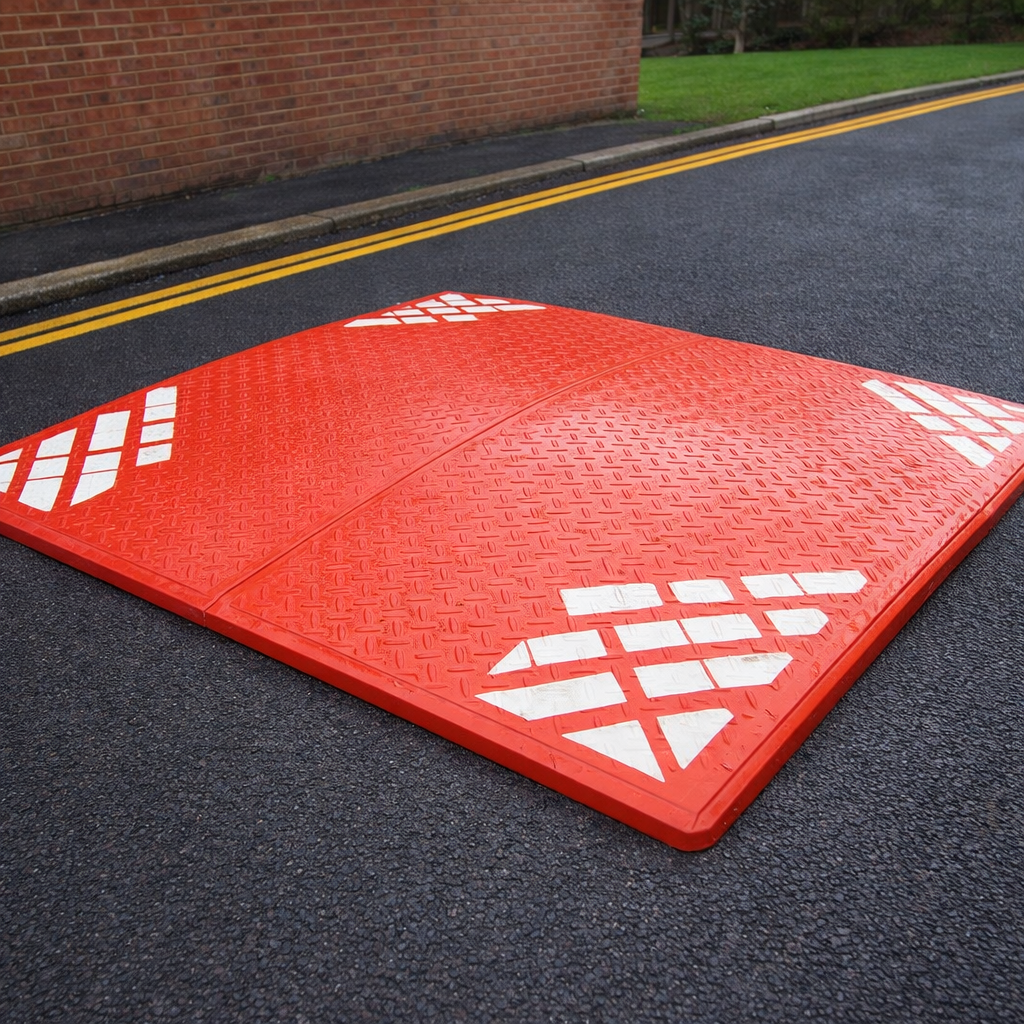
Polyurethane/plastic cushions are typically brighter yellow, lighter, and easier to transport. They may produce slightly more noise at higher speeds and are better suited to lower-traffic environments such as private car parks and school entrances.
Installation Considerations
Speed cushions are secured to the road surface using high-tensile bolts or resin anchors. Ensure the road surface is clean and dry before installation. Most modular systems require two people and basic tools for installation. Always position reflective road studs or delineator markings alongside cushions to alert approaching drivers, as required by LTN 1/07.
Browse the full BarriersCo range of speed bumps, traffic management, and safety barriers.



Recently viewed
- Opens in a new window.
Get 10% Off Your First Order
Join 500+ businesses who trust Barriers Co for their safety infrastructure
Need help choosing?
Our team is online now. Get instant answers about products, bulk pricing, or delivery.
Chat Now