




Last updated: May 2026. Written by the BarriersCo technical team.
Pedestrian Barriers UK — Safety, Crowd Control & Construction
Pedestrian barriers are an essential element of public safety across the UK — from protecting workers on construction sites to managing crowd flow at major events. Whether you need robust steel interlocking barriers for a festival front-of-stage or lightweight plastic barriers for a school crossing point, the right pedestrian barrier makes environments safer for everyone. This guide covers the main types available, their applications, and the UK standards that apply.
Types of Pedestrian Barriers
Interlocking steel crowd control barriers are the workhorse of the events industry. Their hook-and-eye interlocking system allows them to be joined into continuous runs that can withstand significant crowd pressure. Standard UK sizes are 1m and 1.1m high by 2.2m long.
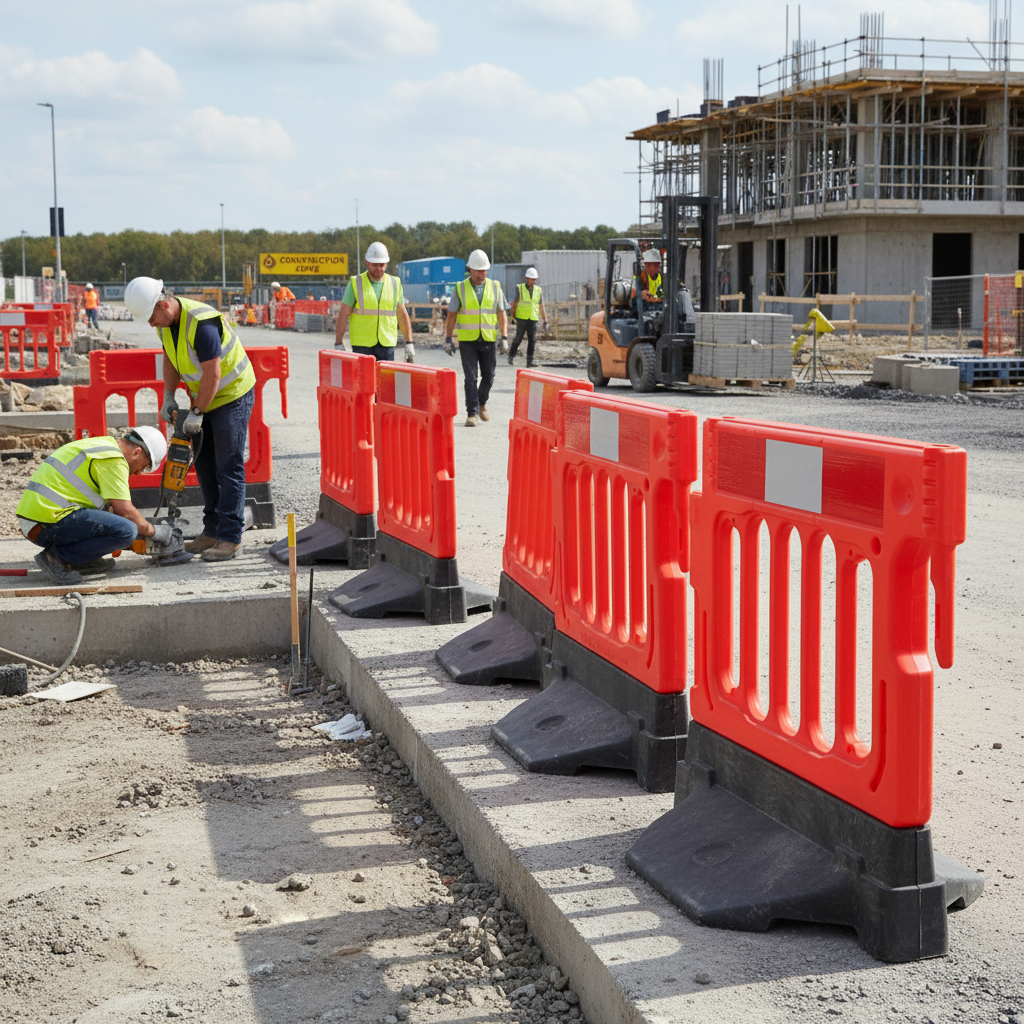
Plastic pedestrian barriers are lightweight, colourful (typically red/white or yellow/black), and ideal for temporary crowd guidance, queue management, and site access control. They can be filled with sand or water for added stability.
Expandable / concertina barriers extend from a compact stored position to cover large areas quickly. Popular for emergency response, retail queuing, and temporary access management.
Hooped steel barriers provide a more permanent pedestrian segregation solution in car parks, pedestrianised areas, and urban streetscapes. Their galvanised or powder-coated finish withstands UK weather year-round.
Belt and post barriers are ideal for indoor and semi-permanent queue management in lobbies, reception areas, banks, and hospitality venues.
Applications and Use Cases
- Construction sites: CDM 2015 requires pedestrian/vehicle segregation — barriers create compliant protected walkways
- Outdoor events and festivals: Stage front barriers, emergency access lanes, crowd flow channels
- Schools and hospitals: Drop-off zone segregation, entrance queue management, safe pedestrian crossings
- Retail and shopping centres: Queue management, store entrance control, promotional event demarcation
- Road and footway works: Chapter 8-compliant pedestrian diversions alongside roadworks
UK Standards and Compliance
Pedestrian barriers on construction sites must comply with CDM 2015 and relevant HSE guidance on pedestrian/vehicle segregation. Event organisers should reference The Purple Guide (Events Industry Forum) and BS EN 13200 for spectator facility barriers. Where barriers are deployed adjacent to the public highway, Chapter 8 of the Traffic Signs Manual will apply to ensure pedestrian routes are clearly marked and safe.
Crowd Flow and Safety Design Principles
Effective pedestrian barrier layouts follow principles drawn from crowd management science: avoid bottlenecks by ensuring sufficient entry and exit width, never dead-end a crowd corridor, and always maintain clear emergency egress routes at intervals of no more than 50m. The Purple Guide recommends a minimum clear crowd corridor width of 1.2 metres for general pedestrian flow and 2 metres for emergency evacuation routes.
Buying Guide
Consider weight and portability (steel barriers are more robust but heavier to handle), interlocking mechanism (hook-and-eye vs pin systems), surface finish (galvanised for outdoor durability), and storage footprint (stacking and nesting capability). For large events, calculate your barrier run length based on your crowd perimeter requirements and add 10–15% contingency.
Browse the full BarriersCo range of safety barriers, water filled barriers, and crowd control equipment.













Recently viewed
- Opens in a new window.
Get 10% Off Your First Order
Join 500+ businesses who trust Barriers Co for their safety infrastructure
Need help choosing?
Our team is online now. Get instant answers about products, bulk pricing, or delivery.
Chat Now